

Would Jesus wear an orange shirt? - By Daryold Winkler, Archdiocese of Ottawa-Cornwall
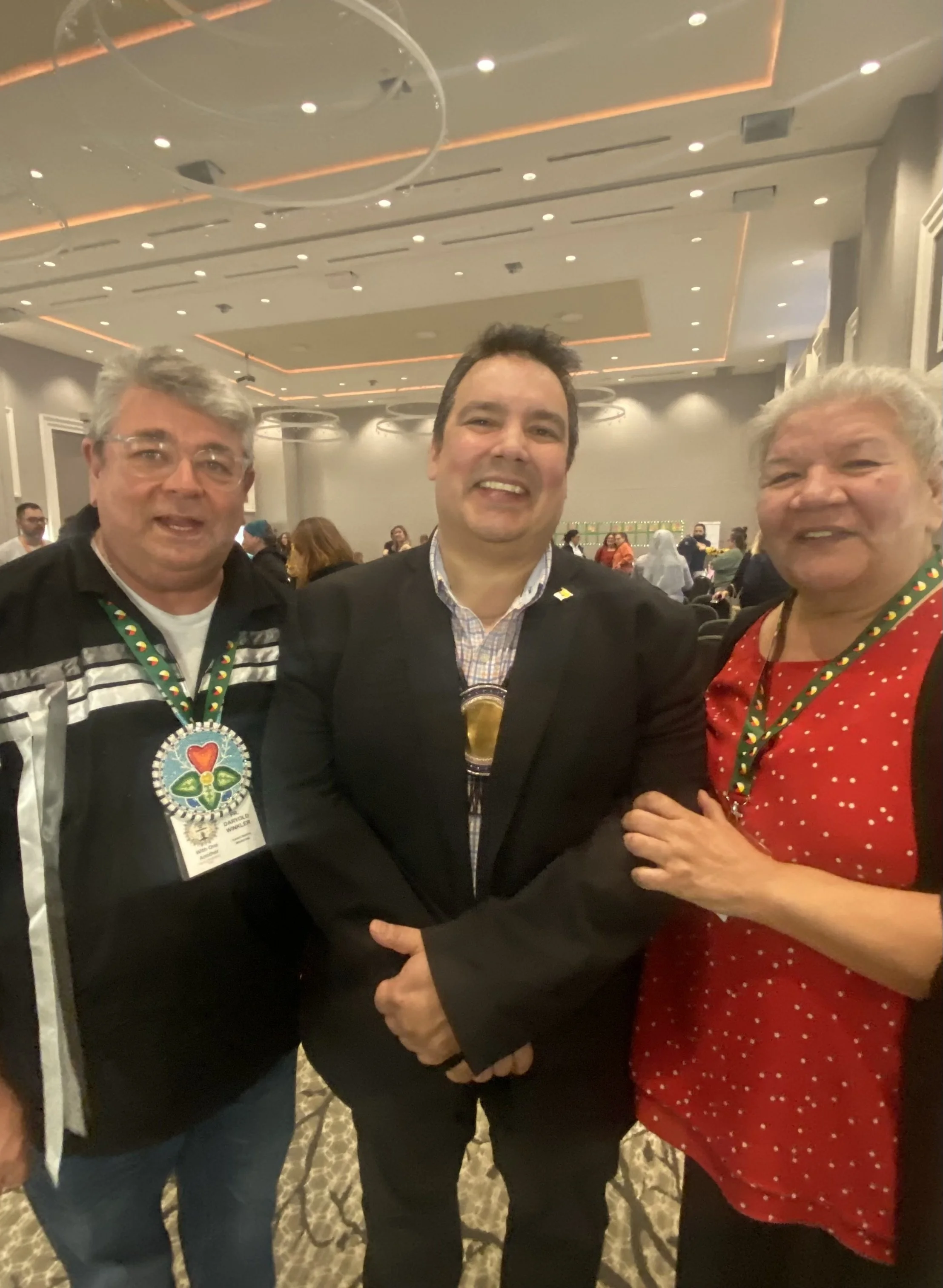
Fr. Daryold Winkler, Niigaan Sinclair and Donna Naughton
Catholic School Chaplains of Ontario Conference “With One Another” -– https://www.csco.ca/conference held on Six Nations of the Grand River near Brantford, ON with keynotes by Niigaan Sinclair and prayers and liturgies with Fr. Daryold Winkler and Donna Naughton of Kateri Native Ministry in Ottawa.
Would Jesus wear an orange shirt?
By Fr. Daryold Winkler, Archdiocese of Ottawa–Cornwall
Organized by the Catholic School Chaplains of Ontario (CSCO), high school chaplains gathered for four days of learning, encounter, and reflection. I had the privilege of assisting Donna Naughton, leader of the Kateri Native Ministry of Ottawa, as one of the Indigenous spiritual guides for the week, walking alongside participants as we listened to difficult truths and witnessed enduring hope.
Drawing on the New Testament, Professor Niigaan Sinclair of the University of Manitoba invited us to reflect on the kind of person Jesus reveals himself to be. Again and again, Jesus moves toward those who are excluded—the ones pushed to the margins, silenced, or dismissed. To imagine him wearing an orange shirt—the symbol of remembrance for residential school survivors—is to recognize that Christ stands in solidarity with those who suffered, and with the families and communities who continue to carry that pain…Read the full reflection on our website (click here)
Niigaan also offered a simple but profound lens: to see reality through “and” rather than “or.” An “or” way of thinking tends toward division—this or that, us or them. The “and,” by contrast, invites inclusion, openness, and the capacity to hold complexity. The history of residential schools is a story of profound harm and of survival. The Church has been complicit in suffering and remains a place where some Indigenous people continue to find meaning and faith. Reconciliation itself is the difficult space where truth and hope are held together.
This lens came into focus during our visit to the Mohawk Institute Residential School. Walking through that place—often called the “Mush Hole”—we encountered the painful reality of children taken from their families, stripped of language and culture, and subjected to lasting trauma. At the Woodland Cultural Centre, we experienced the sacred work of remembering and telling the truth.
And yet, the week did not end there.
Our time with the young people from both the Six Nations and the Mississaugas of the Credit First Nation revealed something equally important. On the powwow grounds, young, confident and proud Haudenosaunee leaders welcomed us into their living culture. Through games such as lacrosse, through dance, and through shared celebration, they embodied confidence, joy, and pride in who they are. What we witnessed was not a culture diminished, but a culture alive and flourishing.
Here again is the “and.” There was an attempt at cultural genocide—and it failed. The resilience of Indigenous peoples is real and deeply hopeful. A new generation carries forward identity and tradition with strength and dignity.
So we return to the question: Would Jesus wear an orange shirt?
Yes—and he would also be present on those powwow grounds. He would stand with those who suffered, and rejoice with those who continue to live, celebrate, and reclaim their identity.
That is where Christ is. And this week, we were given the grace to witness it.