

Monthly Book Recommendation
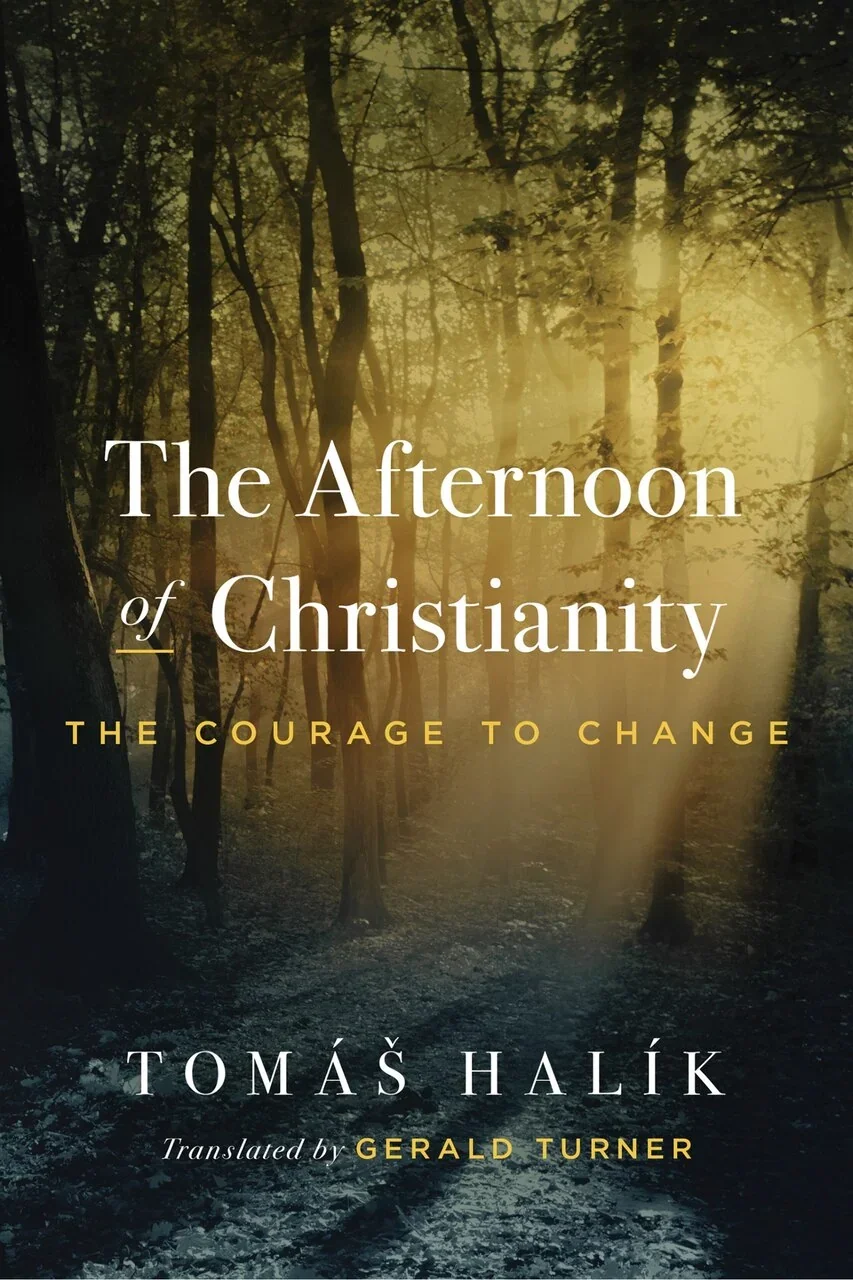
This month we are highlighting Tomáš Halík’s book The Afternoon of Christianity: The Courage to Change
by Catherine M. Pead
The Afternoon of Christianity by Tomáš Halík. University of Notre Dame Press, 2024
This month we are highlighting Tomáš Halík’s book The Afternoon of Christianity: The Courage to Change
Tomáš Halík is a Czech Roman Catholic priest, philosopher, theologian and scholar. He is professor of sociology at Charles University in Prague, pastor of the Academic Parish of St. Salvator Church in Prague, president of the Czech Christian Academy, and a winner of the Templeton Prize. TOMÁŠ HALÍK worked as a psychotherapist during the Communist regime in Czechoslovakia while at the same time was secretly ordained as a Catholic priest and active in the underground church. Since the fall of the regime, he has served as General Secretary to the Czech Conference of Bishops and was an advisor to Václav Havel. He has lectured at many universities throughout the world and is currently a professor of philosophy and sociology at Charles University. His books, which are bestsellers in his own country, have been translated into many languages and have received several literary prizes. HALÍK delivered the opening spiritual address, titled Spiritual Introduction to the European Synodal Assembly, at the European Continental Phase of the Synod on Synodality held in Prague in February 2023.
In this sweeping work, Halík weaves together psychology, philosophy, history, theology and politics. He is at once honest and hopeful, looking the Church’s current moment dead in the eye, and asking if we have the courage to change. The title The Afternoon of Christianity invites to think about the church as an individual in the analytical psychology of Carl G Jung who suggested that individuals progress through their life as if through a day. Morning is a time of innocence when the self is not very aware; noon arrives with the ego at its full height, oblivious to the shadow self- i.e. the unpleasant and inconvenient aspects of the self that complicate our narratives and get in the way of “success.” For Jung maturity comes in the afternoon when the individual is finally willing to acknowledge the flaws, self-deceptions and projections that prevent us from becoming fully human beings, a process he called individuation.
This is the process the Church is called to embrace in this third millennium if it is to speak with authentically to the post-modern, post-communist, secular, polarized world which is filled with many divergent faiths, religions and spiritualities and an ever-growing number of ‘nones’ -those with no religion, faith or spiritualty. Calling the Church to the practice of kairology -reading the signs of the times- and witnessing to the faith that God is in all things, Halík has given us a way to move into the future with courage and confidence, not by denying what and who is in front of us, but by engaging reality truthfully and being open to discern whatever God is revealing in each moment.