

Pope Leo XIV's First Encyclical: Magnifica Humanitas
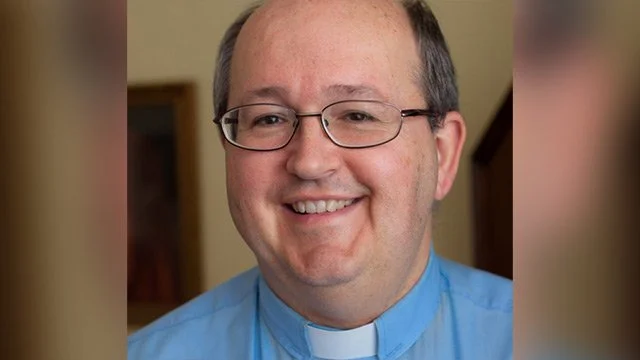
Fr. Ray Lafontaine
Reflection by Fr. Raymond Lafontaine, Director of the Office for English Pastoral Services in the Archdiocese of Montreal.
On May 25, 2026, accompanied by a panel composed of Cardinals, lay theologians, and Anthropic-AI co-founder Christopher Olah, Pope Leo XIV presented to the Church his first encyclical, Magnifica Humanitas. Appropriately, this gathering took place in the Vatican’s Synod Hall; for although referred to in the media as “the Pope’s letter on artificial intelligence,” MH is something far more significant. It provides an excellent summary of the core principles of Catholic social doctrine, and keen insights into how these can be lived in the internal life of the Church, precisely through the ongoing integration of synodal reform.
Having known the privilege of participating in the 2024 Synodal Assembly as a table facilitator, and being present when Pope Francis conferred magisterial authority on its Final Document, it is heartening to see Pope Leo continuing in the synodal and missionary footsteps of his predecessor.
MH is addressed to "all people of good will": this formulation, prevalent in recent papal documents, reflects the Church's conviction that evangelization occurs not only through proclamation to the world, but also through dialogue with the world – one in which the church is situated within the world, and in which church and world are both called to ongoing conversion.
In this first sense, MH is directed outward: to the creators of AI technology, to the companies who deploy it, to its daily users, and to political leaders who, charged with care for the common good, must oversee its deployment in society and protect the vulnerable from its potential abuses. Its impact on the world of work, in the realm of privacy, in the significant ecological impact of its expansion, and in its horrific applications in contemporary warfare, are noted.
Rooting himself in the historical development of Catholic social teaching, and in its doctrinal formulation through its core principles (respect for the dignity and rights of the human person, promotion of the common good through social justice, solidarity, subsidiarity, the stewardship of creation, and the universal destination of goods), Pope Leo draws on these principles to critique the ways in which the rapid and uncontrolled expansion of AI have far-reaching effects to which we – as a society, and as Christians – must attend.
At the same time, MH also represents a call to conversion for the internal life of the Church. Leo insists that these core principles be applied internally: "Social Doctrine is not merely a message addressed to society; it is also an examination of conscience for the Church." (MH 86) This insight connects deeply with those of us who are committed to the ongoing synodal journey.
The encyclical explicitly links synodal reforms with the principles of Catholic social teaching. Transparency and accountability in ecclesial leadership reflect the commitment to pursue the common good together. Broader participation of lay women and men in discernment and decision-making embodies the principle of subsidiarity. Shared responsibility for mission expresses solidarity, recognizing the dignity, rights, and gifts of all the baptized.
Pope Leo reminds us that the credibility of the Church's evangelizing mission is linked in a fundamental way to coherence between teaching and practice. The Church cannot simply advocate justice, participation, accountability, and human dignity in society, while failing to embody and practice them internally.
Magnifica Humanitas presents synodality not as a temporary project, a papal or ecclesial whim, but as the practical application of Catholic social doctrine within the life of the Church itself. As we grow to become a “more synodal and missionary church”, we become more credible witnesses to the Gospel: a living sign that the promotion of the common good, fraternity, and authentic co-responsibility are truly possible. If we can live this in the Church, we can “become the change we wish to see” in our world. Even the world of AI!!
Note: This article draws on several insights helpfully provided by Sebastian Gomes in his recent article, “Why Magnifica Humanitas Is Pope Leo’s most important action on synodality yet”, America Media, 29 May 2026
https://www.vatican.va/content/leo-xiv/en/encyclicals/documents/20260515-magnifica-humanitas.html